
McIntosh County Projected vs Actual
Oklahoma uses Projected Release Date, or PRD, for ODOC's estimate of when a sentenced state prisoner may release. The Oklahoma Pardon and Parole Board glossary says that the figure can rise or fall with behavior credits, program participation, and misconduct. The Board does not calculate it. ODOC sentence administration applies the judgment, credited time, sentence structure, statutory restrictions, earned-credit level, misconduct, and later changes.
An actual release date records what happened after staff completed processing and all holds were addressed. A PRD is forward-looking. A past ODOC discharge date is historical. A parole eligibility date means the person can be considered for parole; it does not predict the prison-door exit. A Board docket date is only a proceeding date. Mixing any of these dates can produce a false answer.
Pretrial custody is different. A person awaiting the outcome of a McIntosh County case may leave after bond or a court order, stay because bond is not met, or remain under another hold. There is no sentence-based PRD to calculate. Check the case and ask the jail for the release or transfer entry.
Find McIntosh County Projected Dates
Begin with the last known custodian. McIntosh County Jail holds county detainees and county-sentenced people. ODOC holds state prisoners at facilities across Oklahoma, even though no state prison was verified within McIntosh County. The ODOC Offender Lookup is appropriate only when the person entered the state correctional system. It does not document an ordinary county bond release.
- Search the McIntosh County court case to determine whether the person is pretrial, county-sentenced, or sentenced to ODOC.
- For county custody, call the sheriff and ask about the sentence, applied county credit, holds, and liberation instrument maintained for that person.
- For ODOC custody, accept the lookup disclaimer and match name, birth date, and ODOC number.
- Read status, facility or supervision placement, sentence, and date fields together. Do not assume every public profile displays a future PRD.
- For a restricted exact date, use the confined person's monthly days-remaining figure, an authorized request, or a qualifying Victim Services route.
- After the estimate passes, confirm the completed release event and destination with the agency.
The broader county custody and court path is available on the McIntosh County released inmate search. It is useful when a family does not know whether the jail sent the person to ODOC or released the person to the community.
Note: A McIntosh County Jail departure marked “transfer” is not actual community release, even when the county roster no longer shows the name.
McIntosh County ODOC Date Limits
ODOC's current public guidance creates an essential limit. Its Offender Information FAQ says an inmate's release date is confidential unless the requester can show a legitimate need of the kind the agency recognizes. The confined person receives the number of days remaining at the end of each month and may share that estimate. ODOC also calls the date tentative because earned-credit level, misconduct, and achievement credits can change it.
Other ODOC material has referred to a projected release date in public lookup information, but a live profile was not used to confirm that every current result shows the field. The safe approach is not to promise a public date. Use any visible field only as labeled on the live record, and do not infer an omitted PRD from other dates. For an exact request, sentence administration controls.
The official FAQ is visible in the following capture from ODOC Offender Information.
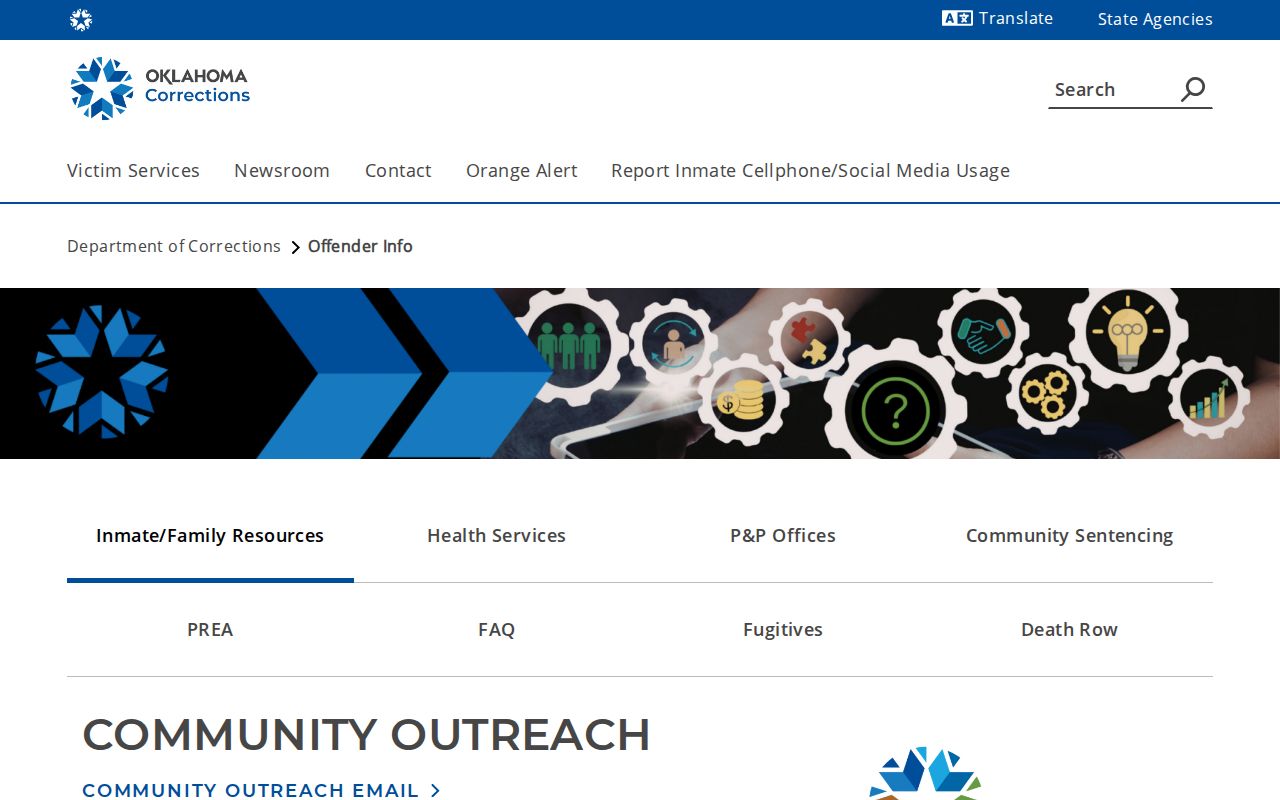
The confidentiality and tentative-date warning should stay with any McIntosh County PRD discussion, even when another source displays a date.
McIntosh County State Earned Credits
For an ODOC sentence, 57 O.S. §138 governs earned credits by class level. Each earned credit equals one day of incarceration, and the law provides for loss and restoration under its rules and ODOC policy. Section 138.1 addresses qualifying meritorious achievement credits. These credits are applied within sentence administration, not by subtracting a flat number from the judgment.
The inputs include the judgment, jail credit, concurrent or consecutive terms, the governing offense statute, class and security level, misconduct, achievement credits, and later court orders. A corrected jail-credit entry can move the estimate. So can a change in credit class or a disciplinary loss. Two people with the same stated term can have different PRDs because their cases and credit histories differ.
ODOC's official projected-release-date worksheet models credit and security scenarios. It is an educational document. It warns that projections do not apply in a simple way to sentences with restricted credits. It should never be used as a personal calculator for a named McIntosh County inmate.
Note: Earned credit can affect an estimate, but only ODOC sentence administration can state how it was applied to one record.
McIntosh County 85% Rule
Oklahoma's commonly named 85% rule is 21 O.S. §13.1. It applies to enumerated offenses, not every felony and not all people in McIntosh County Jail. The exact conviction statute must be compared with the current statutory list. An arrest charge may later be amended or dismissed, so the booking label alone cannot settle whether the restriction applies.
The rule also should not be converted into a web estimate. Parole eligibility, earned-credit restrictions, and projected release are related but distinct. Life sentences and other restricted categories have their own treatment. Read the judgment and current statute, then rely on ODOC for the official sentence calculation. The image below comes from the official Oklahoma Title 57 collection.
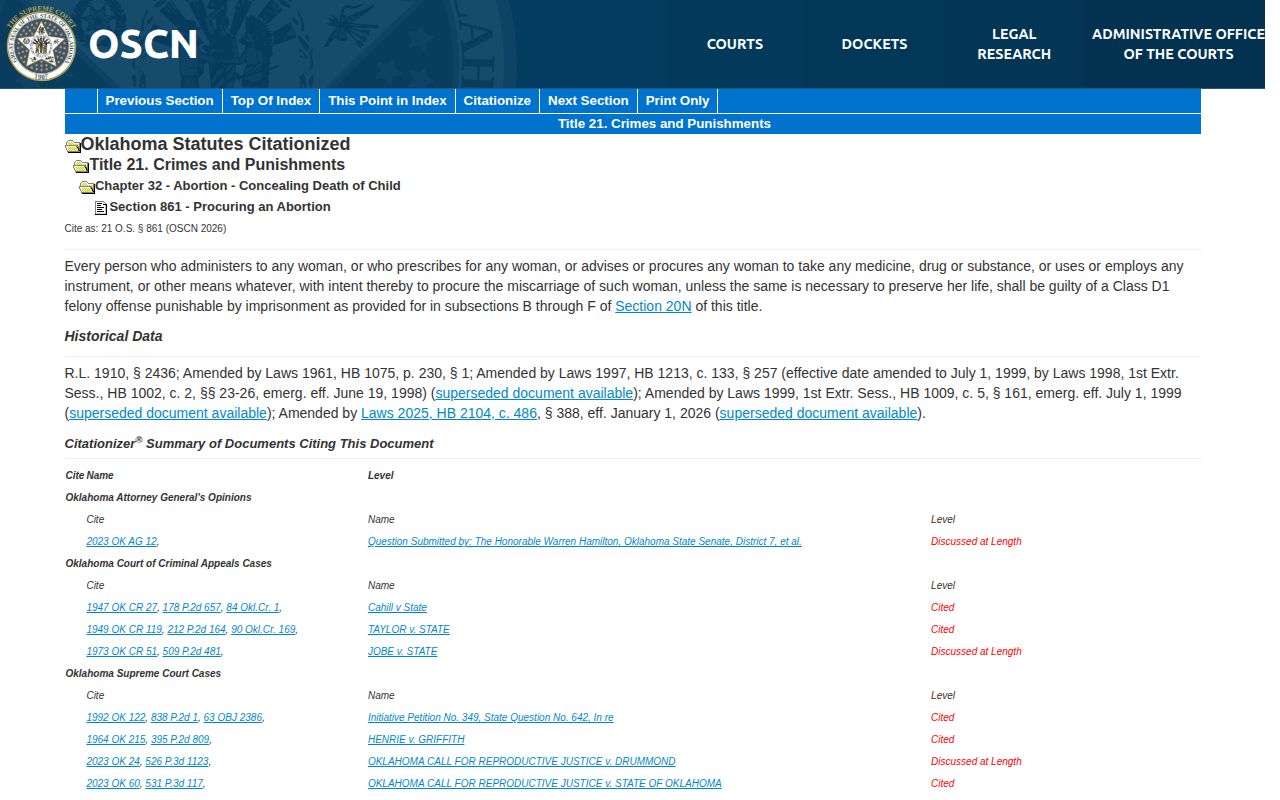
The statutory text supplies the legal framework, while ODOC records show the result of applying that framework to a specific sentence.
McIntosh County Jail Credit Rules
County sentences use a separate Oklahoma framework. Under 57 O.S. §65, a person serving county-jail time as a result of conviction can receive five days of credit for every four days served when jail rules are satisfactorily obeyed. Section 58.3 contains separate credit provisions for qualifying prisoner labor. These rules do not apply indiscriminately to pretrial detention.
A McIntosh County calculation must come from the jail and court record. Ask which sentence is being served, what jail or labor credit was applied, whether another case creates a hold, and which instrument authorizes liberation. Oklahoma law requires the sheriff to keep instruments committing or liberating jail prisoners under 57 O.S. §62. That existing record is more reliable than an arithmetic estimate made from a docket summary.
A county sentence completion can result in release to the community, but an ODOC commitment, another county warrant, tribal or federal pickup, or other detainer can change the destination. The nominal completion date and the community-release date may therefore differ. Always ask for disposition and receiving agency.
How McIntosh Release Math Differs
McIntosh County presents two distinct computation tracks. State PRD uses ODOC sentence administration, §138 earned credits, and any applicable restrictions. County post-conviction time uses the county judgment, §65 credit, and any qualifying §58.3 labor credit. Neither track supplies a fixed date for a person merely held before trial. This sharp split is the key local release-date issue.
The following comparison keeps the routes separate and prevents a state worksheet from being applied to a county term.
| Custody setting | Date basis | Best confirmation |
|---|---|---|
| McIntosh pretrial detention | Bond, court action, and holds rather than a PRD | Court docket plus jail release event |
| McIntosh county sentence | Judgment, actual jail credit, §65, and qualifying §58.3 credit | Sheriff or court calculation and liberation instrument |
| ODOC state sentence | Judgment, jail credit, §138 and §138.1 credits, restrictions, conduct, and policy | ODOC sentence administration and eventual discharge event |
Do not calculate either sentence for a named person from public snippets. ODOC explicitly treats the state estimate as tentative, and only county officials can confirm the credits actually posted to a county term.
Why McIntosh Release Dates Change
A PRD can change without an error. Some changes arise from earned-credit behavior. Others correct sentence inputs or reflect a new legal event. A projected date also may arrive while a separate hold remains active, which means the person may leave one custodian but not enter the community.
| Factor | Possible effect | Where to confirm |
|---|---|---|
| Credit-class change | Changes the pace of state earned credit | ODOC sentence administration |
| Misconduct or lost credit | May push an ODOC estimate later | ODOC record and applicable policy |
| Achievement credit or restoration | May move an estimate earlier | ODOC calculation |
| Corrected jail credit | Changes time already credited | Court and sentence record |
| Consecutive case or new order | Adds or changes time to be served | Court judgment and ODOC record |
| Detainer or receiving hold | Can prevent community release after departure | Custodian's movement and destination entry |
| Parole action | May create a conditional community-release route | Board result plus ODOC release status |
Confirm McIntosh County Release
For formal ODOC documentation, use Offender Records and Registries. The agency lists Closed Records at 405-425-2691, osor@doc.ok.gov for record inquiries, and osordischarges@doc.ok.gov for discharges. Supply the ODOC number and relevant date range. A subject authorization may be required for records not available to an unrelated requester.
For a county sentence, use the official sheriff directory and contact McIntosh County Jail at 918-689-4357 during posted weekday office hours or after-hours dispatch at 918-689-2526. Ask for the actual release date and time, disposition, holds, and destination. Pair the response with the court order. If the person transferred, continue in the receiving system.
Oklahoma VINE can provide an alert when the reporting agency sends a custody change. Registration and confirmation steps are covered on the McIntosh County VINELink Check. An alert remains secondary to the completed release or discharge record.
Note: Confirm the final destination because release from one record can be a transfer into another agency's custody.
McIntosh Release Date Evidence
The strongest state-release confirmation combines the public ODOC record for identity and displayed status with official sentence-administration or discharge documentation. Add a Pardon and Parole Board result only when parole was part of the path, then confirm community supervision with ODOC. A court judgment states the sentence but generally does not compute the final credit-adjusted release date.
For county custody, pair the judge's order with the jail event. The order supplies legal authority, while the sheriff's entry shows execution and destination. VINE is useful for timely notice but depends on agency data. A negative roster result and an estimated date are weaker than a positive, custody-specific release record.
Search ODCR for the McIntosh case, then request certified order text from the McIntosh County Court Clerk when wording matters. A docket minute can explain a sentence change, but only the filed order and corrected custody calculation show its formal effect.